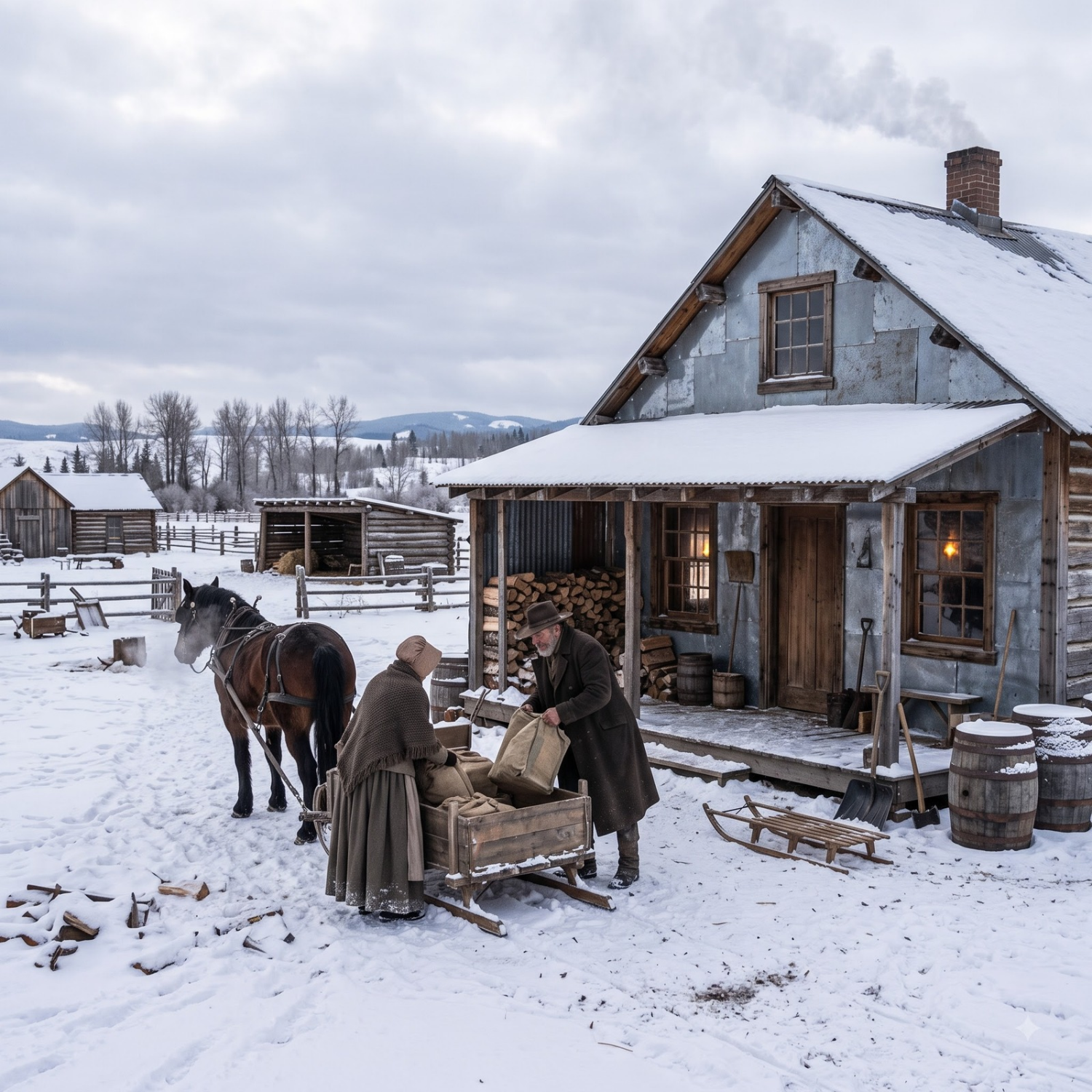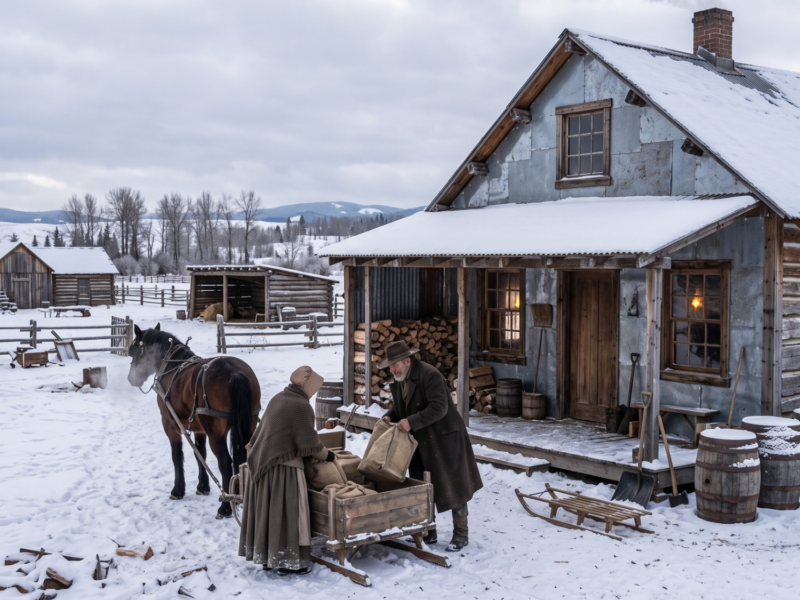
Settlers Laughed at His Sheet-Metal Wrapped Cabin — Family Lived While Neighbors Froze
THE SPENGLER OF THE BLACK FOREST
Friedrich Fohl was not a carpenter. He was not a logger, a farmer, or a land speculator. He had never hewn a dovetail joint in his life, nor could he read the grain of a white pine log to predict how it might split under an axe.
In his homeland, deep within the Black Forest of Germany, he was a Spengler—a master of sheet metal. His hands knew the precise, demanding language of metal, not wood. They understood the exact compound angle required for a copper flashing to shed a century of mountain rain, the delicate thermal balance needed to sweat a zinc gutter joint into a single, seamless, leak-proof channel. His world was one of standing-seam roofs designed to withstand the driving wet sleet of high alpine passes, of copper soldering irons heated in charcoal brazers, and of heavy wooden mallets that shaped metal without fracturing its skin.
He thought not in terms of massive bulk and raw thickness, but of protective skins and absolute seams.
He had come to America with his wife, Anelise, and their two small children, Klaus and Marta, seeking land and a life defined entirely by their own labor. They had arrived in Wisconsin the previous autumn, full of the fierce, unyielding hope common to immigrants—hope that quickly curdled into a cold, hard knot of terror during their very first winter.
They had spent that inaugural season in a hastily erected log cabin, a structure considered perfectly adequate by local frontier standards. But “adequacy,” Friedrich quickly learned, was a deceptive word that meant something entirely different at ten degrees above zero than it did at thirty degrees below.
That first winter had been a relentless, brutal education in the physics of misery. Friedrich learned quickly that cold was not a passive, static state of being; it was an active, predatory force that hunted down every microscopic flaw in a dwelling.
He remembered the “beard ice”—the frozen condensation from their own sleeping breath—growing so thick on the inside surface of the heavy oak door that when he pulled the leather latch strap one morning, the ice-welded wood snapped with a sharp, explosive crack like a gunshot.
He remembered dipping a tin ladle into the water bucket and having the frozen metal handle instantly pull a patch of living skin from his wet thumb, leaving a raw, weeping wound that refused to heal for a week.
Most haunting of all, he remembered the night when the cold was so absolute that the iron of the stovepipe contracted with such violent suddenness that the flue damper rang shut on its own hinge with a mournful, metallic clang that woke the entire family from a shivering sleep.
Anelise had spent most of that winter huddled beside the roaring iron stove with the children, wrapped in every woolen blanket they owned, their faces pinched, pale, and haunted by the threat of freezing in their beds.
With the quiet, terrifying intensity that defined his character, Friedrich had vowed that his family would never endure such a winter again. For him, survival was not a matter of local tradition or stubborn pride; it was a pure, uncompromised problem of engineering.