The Medallion on the Marble
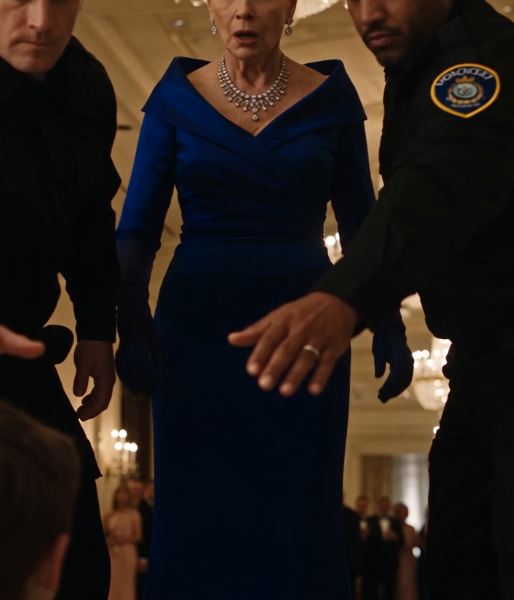
Two LionsThe guard's hand came down on Toby's collar like the hand of God.
It was a very large hand. It was dark-sleeved and white-gloved at the cuff, and it closed round the back of his tunic and the knot of the leather cord beneath it with a grip like a vice, and it lifted. His feet left the floor. His stomach swung up into his throat. The last roll fell from his fist and bounced across the marble, and he heard a woman say oh! in a thin delighted voice and a man say finally, and somewhere above him a deep flat bored voice said:
“Right, son. Up. Now. You can’t be in here.”
“I’m only hungry,” said Toby.
It came out a squeak. It was all that he had. He twisted in the iron grip, flailing, and his heel struck the tray with a clang and sent it skittering, and his hands flew up and caught at nothing. The cord at his throat dug into the back of his neck. He felt it bite. He felt the old leather, frayed and thin from nineteen months of wear, begin to give.
“Please,” he gasped. “Please. I wasn’t— I only— I’ve got to see the lady, I’ve got to see her, my mum said—”
“Your mum can come and collect you from the station.”
“She can’t!”
The cord snapped.
He felt it go. It went with a small dry sound like a twig breaking, and he felt, all at once, a lightness on his chest where there had always been a weight, and a hot cold terror went through him from his head to his feet. His hand flew to his throat. It closed on empty air.
“No,” said Toby. “No—”
The medallion hit the floor.
It struck the marble with a clear high silvery ring, a single bright note like the tap of a spoon on a glass, and in the stilled, listening hush of that enormous room, every head turned.
It spun.
It skittered across the polished stone in a long, slow, glinting arc, turning on its edge like a coin on a table, and the light of six chandeliers slid over it in rainbows. It struck the leg of a gilt chair and bounced. It rolled. It slowed. It wobbled, and wavered, and at last, with a faint, tinkling, delicate, final little rattle, it fell flat, face up, on the cool gold marble, in the exact centre of the dark blue shadow of a woman’s hem.
There was silence.
It was an old thing. Augusta saw that first.
It was not a brooch, nor a trinket, nor any cheap bright piece of tourist metal. It was the size of a half-crown, thick and heavy and worn smooth at the rim, cast in a deep soft yellow gold that had gone a little dark in the crevices from long years against skin. A loop of frayed brown leather trailed from it like the tail of a kite. And on its face, deeply chased, a little rubbed with handling, but unmistakable, was a design that she had seen every day of her life.
A shield. A crown above it. And on either side, rearing on their hind legs with their forepaws raised and their tongues out, a pair of lions.
Her breath stopped.
It did not slow. It stopped, as a clock stops, all at once, in the middle of a tick. She stood in the great ballroom, in the glittering golden light, in a gown that had cost more than a house, and she could not draw air into her lungs. Her hands had gone dead. The diamonds at her throat seemed to burn like a ring of ice.
No, she thought. No. It’s a copy. It’s a souvenir. They sell them at the gate. They sell them to the tourists at Wexmoor Hall, in the little shop by the car park, for four pounds ninety-nine.
But they did not sell them in gold.
They did not sell them with the motto.
She could see it from where she stood. She did not need to bend. A band of tiny letters ran round the rim of the disc, half worn away by years of rubbing, in the old clipped Latin of her husband’s family. She did not have to read it. She had known it since she was twenty-two years old, since the day she stood at the altar and was told that it would be hers.
SEMPER REDEO.
I always return.
There were only two of them in the world.
One hung at her own throat, tucked beneath the diamonds, on a plain gold chain that she had not taken off in forty-four years. She could feel it now, a small warm weight against her collarbone, beating in time with her blood.
And the other—
The room dropped away.
It was a bright spring morning, and a girl of eighteen was laughing.
It came to her whole, in a rush, not as a memory but as a place, as though the ballroom had opened under her feet and she had fallen through. She was standing in the sunny morning room at Wexmoor Hall, with the long windows open on the lawn and a smell of cut grass and honeysuckle drifting in on the breeze. She was fifty-two, and tired, and a little stiff in her new silk. And in front of her, in a white summer frock with her fair hair pinned up and her cheeks pink with excitement, stood her only child.
“Mummy,” said Isabelle. “You can’t mean it.”
“I do. Hold still, darling.”
She had unclasped the chain at her own neck. It had been her mother-in-law’s, and her mother-in-law’s mother’s before that. It had been made for the second Countess in 1789, by a goldsmith in St. James’s, who had cast two medallions from a single mould: one for the lady of the house, and one for the daughter to wear on the day she came of age. The two lions. The crown. The shield. The words that every Wexmoor child learned before she could read.
She had hung the second one round her daughter’s neck with her own hands.
“There,” she had said. Her voice had not been quite steady. “It was meant for your eighteenth. I thought you ought to have it early. You’ll wear it for me, won’t you?”
Isabelle had put up her hand and touched the little gold disc where it lay at the base of her throat. She had looked down at it. She had looked up. And she had smiled, the wide, uncomplicated, radiant, heart-stopping smile that she had been born with, that lit her whole face from within like a lamp behind a curtain, and said:
“Semper redeo. I always return. Oh, Mummy. I’ll never take it off.”
She had kept her word.
She had kept it for four years. She had worn it to Cambridge, and to London, and to a hundred balls and dinners, under the neckline of her dresses, where it warmed against her skin. She had worn it on the night in the library, six years later, when she sat in the big leather chair with her hands folded and her chin lifted, and said, in a small, clear, determined voice: Mummy, Daddy, there’s someone I want you to meet.
He had been a carpenter.
A tall, shy, brown-eyed, broad-shouldered young man from Bristol with sawdust in his hair and calloused hands, who had been brought in by the Trust to restore the old chapel roof. He had been twenty-six. His name was Samuel Hartley. He had stood in the library of Wexmoor Hall in a borrowed tie, turning his cap in his hands, with his eyes fixed on a point just past the Countess’s left shoulder, and said, I know it isn’t what you wanted for her, my lady. But I’ll look after her. I swear it.
She had looked at him for a long cold minute.
Then she had said, in the voice that had cut down Cabinet ministers: I am afraid, Mr. Hartley, that you have been misinformed about the nature of this family.
She could still hear what Isabelle had answered. Quiet, pale, steady. Then perhaps the family has been misinformed about me.
She had never been so proud, nor so furious, nor so frightened in all her life.
And she had said the thing that she could not unsay.
It had come out of her in the grey light of the library, in the weeks after Henry’s funeral, when she was fifty-five and a widow and out of her mind with grief. Her husband had died in a car park in Bristol. He had been on his way, it turned out, to see his daughter, whom he had been meeting in secret every month for two years behind his wife’s back. The doctor had said his heart. The nurse in the pink tunic had said I think you might like to sit down. And Augusta had sat, on a plastic chair in a corridor that smelled of disinfectant, and learned in the space of half a minute that she had been betrayed by the two people she loved best.
You killed him, she had said to her child, in the library, in a voice like cracking ice. If you had not run off, he would not have been driving that road. His blood is on your hands. You will not come to this house again. Do you understand me? The door is closed.
Isabelle had said nothing. She had stood quite still. She had put her hand up to her throat, to the little gold disc, and held it for a moment; and Augusta, in her fury, had thought she was going to take it off, and hurl it at her feet.
She had not.
She had turned, and walked to the door, and gone out of it, and the door had closed behind her with a very quiet click.
And it had never opened again.
“Madam?”
The voice was a long way off.
“Madam. Lady Wexmoor. I’m so sorry. We’ll have him out of here in a moment. If you’d just step back—”
She was standing in the ballroom. The chandeliers blazed. The strings had stopped. The silence in the great gold room was so profound that she could hear the tick of somebody’s wristwatch. Four hundred faces were turned towards her, pale and curious and avid, like fish in a tank, and beyond them, in the arch of the great doors, a crowd of waiters stood motionless with trays in their hands.
At her feet lay a gold medallion.
She did not remember looking down. She was looking down now, with her gloved hands clenched at her sides, and her whole body had begun to shake with a deep fine tremor, as though a great engine somewhere in the foundations of the house had been started up.
She lifted her eyes.
The boy was standing three feet away. He had been set down, abruptly, by the guard, who still had a fist wound in the back of his tunic. He stood stiffly, with his arms by his sides and his head thrown back, staring up at her with huge, unblinking, terrified eyes. They were pale grey-green. They were the colour of a winter sea. They were set wide in a small pointed face, under a pair of straight dark brows, and there was a scab on his cheekbone and a crust of crumbs on his upper lip, and as he stared, his chin began to wobble.
And the way that he held his head, a little to one side, as though listening for a distant bell, was so exactly, so devastatingly the way that she had once held her own, a very long time ago, in a cold stone nursery, that Augusta Wexmoor felt the floor of her whole life tilt gently, and slide away.
“Child,” she said.
It came out a croak.









