The Medallion on the Marble
My Lady, Please"Madam, please. He's just a street kid."
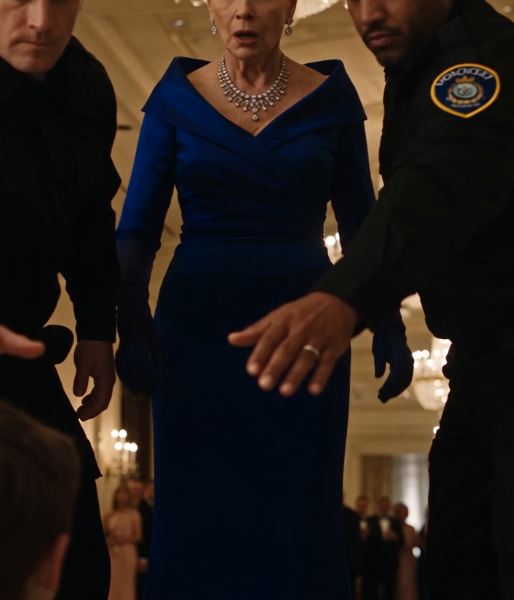
It was the guard who spoke. His name was Gerald Voss, and he was a decent man, in his way: a big slow honest forty-year-old with a square face and a bad back and two daughters of his own. He had been a sergeant in the Marines before he was head of security at Claridon House, and he had learned, in a long and varied career, the exact tone in which to speak to a distressed woman in a very expensive dress. It was low, and firm, and kind. It was meant to soothe.
It did not.
She turned her head and looked at him.
He was not a man easily frightened. But something in that look, in the sudden dark blaze of the narrow blue eyes in the stern white face, made him take a quick step back.
“He is a thief, madam,” he said, more gently than he meant. “He’s got in through the kitchens. We’ve had trouble with them before. They work in gangs. One of them distracts you and the rest go through the coats. I’ll have him out in thirty seconds and the police will—”
“He is eight years old,” said Augusta.
“Yes, madam. They usually are.”
It was a fair answer. It was the answer of a man who had seen a great many things, and it was not unkind. And it was the gentleness of it, the tired, patient, reasonable, experienced gentleness, that struck Augusta, with a force like a physical blow, as the worst thing that she had ever heard.
They usually are.
She thought of a girl in a white frock. She thought of a bright spring morning, and a blue sky, and a pair of hands fastening a chain. She thought of a small dark room in Bristol with a gas fire and a cot, and a girl with her hair in a plait, singing something under her breath to a baby, and no one to hear. She thought of eleven winters. She thought of every Christmas she had spent at a long polished table, alone with an enormous goose, saying how very kind.
She stooped.
She did it slowly, with a curious, stiff, grave deliberateness, like a woman bending to lift something from a grave. She put out one dark-gloved hand. She picked up the medallion by its broken leather cord. And she held it, in the glow of the chandeliers, in front of her own eyes.
The lions glittered.
It was warm.
That was what undid her. It was warm, as a living thing is warm, with the heat of a small body. It had hung against a child’s skin for a very long time. She could feel the little weight of it in her palm, solid and heavy and impossible, and, beneath the leather glove, as clearly as if she had touched it with her bare hand, the shallow worn groove on the back of the disc where a thumb had rubbed, and rubbed, and rubbed.
Isabelle’s thumb.
She had done it in the schoolroom, when she was nervous. She had done it at Cambridge. She had done it, Augusta had been told by a tall, shy, brown-eyed man in a borrowed tie, on the night that she told her parents she was in love.
“Madam,” said Gerald Voss.
“Lady Wexmoor.” It was a different voice, now: smooth, anxious, intimate, close at her ear. “Augusta. My dear.”
A hand touched her elbow.
She did not have to look. She knew the scent: sandalwood, and bay rum, and something faintly sweet underneath, like a bruised apple. Rupert Wexmoor had been wearing the same cologne since 1986. He stood at her shoulder, a plump, pink, solicitous figure in impeccable white tie, with his small soft hand cupped under her arm and a look of the most tender concern on his round face.
“You’ve gone quite pale,” said Rupert. “You mustn’t distress yourself. These things happen at events like these. They are a risk, my dear. I did warn you, if you remember, about the open door policy. Do let Mr. Voss take the boy away. He will be perfectly all right. There are a number of excellent shelters in the borough, and I shall personally see that he’s given a hot meal and a bed.”
“Rupert.”
“Yes, my dear?”
“Look at this.”
She held it out.
It was a small thing. It lay in her palm in the brilliant light, bright and heavy and warm, with its two rearing lions and its little crown. And she watched his face. She watched it very, very carefully, as one watches a pot on the point of boiling.
He went white.
It was only for an instant. The colour drained out of his round pink cheeks like water from a basin, and left him the grey of putty, and his pale eyes widened and flickered and slid for an instant sideways, to the boy, and then back. Then it was gone. A smile was pulled over the face like a sheet over furniture. But she had seen. She had seen the flicker of pure naked terror, and in that moment, with the awful lucidity of a woman looking down the barrel of a long-hidden truth, Augusta Wexmoor understood several things at once.
“It’s a copy, Augusta,” said Rupert gently. “They sell them at the gate.”
“In solid gold?”
“A— a clever fake. A bit of gilt. A tradesman’s souvenir. This child is a pickpocket. Look at the state of him. He has very likely stolen it, from some poor tourist, or from a charity shop, or—” He gave a fluting little laugh. “My dear, you are overwrought. You’ve been on your feet since six. Gerald, please, take the child. Mind you’re gentle with him.”
“No,” said Augusta.
“Augusta—”
“Take your hand off my arm.”
He did not.
It was a small thing, but she felt it: a faint, firm, sustained, deliberate pressure on her elbow, as of a man steering a boat. And on her other side, with a polite and apologetic cough, Gerald Voss had put out his hand and closed it, very respectfully, very lightly, round her wrist.
She understood. They were holding her. They were not being rough. They were being protective, as one is protective of a sick relative at a funeral. A plump hand at her elbow, a large one at her wrist. They moved her back, one step, then another, away from the boy and the chair and the dark glinting puddle of light on the marble, and she felt, with a cold dreamlike horror, that if she let them take three more steps, then the thing would be done. The boy would be taken out through the kitchens. A van would come. And she would stand in the ballroom of Claridon House, in her blue silk, with a gold medallion in her hand and a whole tragic past in her throat, and say how very kind, and thank them all for coming.
Semper redeo.
I always return.
Her chest heaved.
She was a Wexmoor. She had been trained, from the cradle, not to make scenes. She had stood perfectly calm at her husband’s graveside, and at the reading of his will, and in the dock of her own long loneliness, and she had never, in sixty-six years, lifted her voice in a public room.
She took a long breath. She felt it fill her lungs, to the very bottom, as it had not for twelve years.
“Gerald Voss,” said Augusta Wexmoor.
She did not raise her voice. She did not need to. It rang across the ballroom like a bell, cold and clear and carrying, in the voice that had once silenced a Cabinet.
“You are going to take your hand off my wrist.”
He let go.
It was instinctive. It was a reflex, like pulling back from a stove, and he stood with his hand hanging in the air, blinking, as a man might stare at a hound that has suddenly spoken.
“And you, Rupert.”
His fingers dropped from her sleeve.
“Take. Your hands. Off me.”
She turned.
She turned her back on both of them, and on the staring crowd, and on the whole bright tilting glittering room, and she lifted her long dark blue skirts in her gloved hands as she had not done since she was twenty years old and ran down the great staircase at Wexmoor on the morning of her father’s funeral. The silk flew out behind her like a banner. The diamonds blazed.
She ran.
She crossed the marble in six long strides, past the Pembertons with their open mouths, past the tilted ice swan, past the circle of white-faced guards, and the boy stood there with his back against a gilt chair, small and rigid and ragged, with his scab and his crumbs and his huge frightened eyes. She did not stop. She did not think. She came down on her knees in front of him on the cold polished stone, with a rustle like a flight of wings, and caught him by both thin shoulders with her trembling hands.
They were so small.
She had forgotten how small they were. The bones moved under the thin torn cloth like the bones of a bird. She felt him flinch. She felt him go stiff, and then, very slowly, as she held him, as she did not let go, she felt the first faint, fine, uncontrollable shudder begin to run through him from head to foot.
“Child,” said Augusta.









