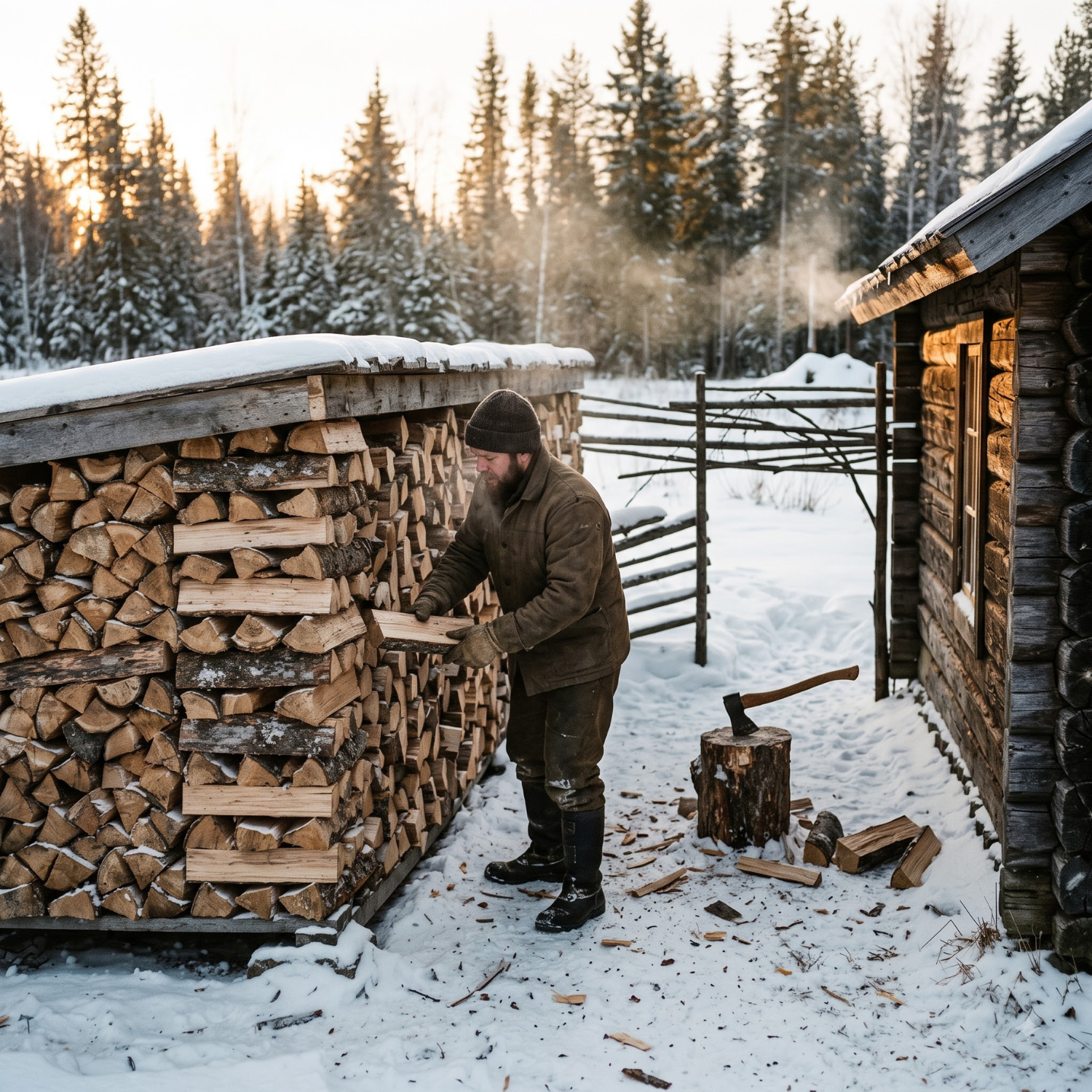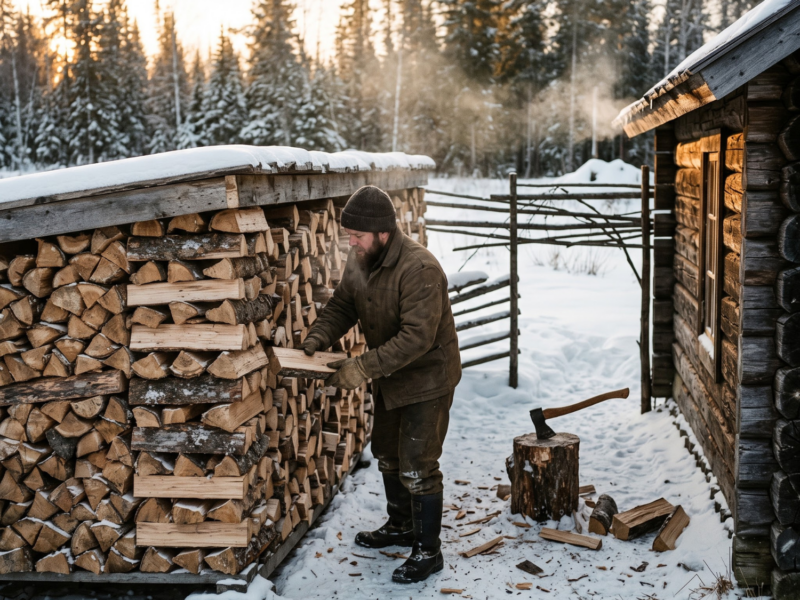
He Stacked His Winter Fuel Into a Wall — The Wood Broke the Wind Before It Ever Reached the Stove
The Bitter Mathematics of Cold
The cabin Matti built in the autumn of 1903 was, by all conventional standards, serviceable. He had felled tamarack and spruce, peeled the bark with a drawknife, and notched the corners with steady, practiced swings of his broadaxe. The roof held against the rain. The cast-iron stove, purchased second-hand in Duluth, drew well. Before the first snow fell, Matti had spent days packing moss and heavy, wet clay into the chinks between the logs, sealing the perimeter twice over.
His wife, Aino, had stood beside him, watching the horizon. She was a pragmatic woman who kept the household accounts in a small, blue-ruled notebook. She measured their survival in pounds of flour, ounces of lamp oil, and pennies saved. Together, they had two children: Oscar, a perceptive boy of eight, and Elsie, a delicate five-year-old.
But when the true Minnesota winter arrived, none of Matti’s careful chinking mattered.
The cabin sat on a slight rise in the land. Once, this elevation would have been sheltered by a dense canopy of pine. Now, it was exposed to hundreds of yards of open ground. When the northwest winds came howling across that void, they struck the north and west walls of the cabin with unmitigated violence.
Inside, the home felt unfinished. The cold did not simply leak into the room; it pressed against the timber with a physical weight. The wall logs themselves seemed to act as parasites, drinking the heat from the room and exhaling a bone-chilling dampness.
On the worst nights, Aino would hold a strip of torn cotton cloth near the corner of the west wall. Matti would watch from the table as the fabric trembled and snapped, agitated by drafts that pushed through invisible weaknesses in the timber.
The iron stove became the desperate center of their existence. There was nowhere else to be. Oscar slept in his heavy wool shirt, curled into a tight ball. Elsie’s small bed had to be dragged away from the north wall into the center of the room, upending the living space. Every morning, long before the sun dared to breach the horizon, Aino knelt by the stove, warming the children’s stiff wool socks against the iron before they could dress.
Matti rose three, sometimes four times a night to feed the fire. The sheer volume of wood disappearing into the firebox bothered him almost as much as the cold.
Outside, he had stacked his fuel under a rough, slanted cover of scrap boards—the exact way every other family in the cutover stored their wood. But the open wind drove the snow sideways, working it deeply into the pile from the exposed sides. When a brief, deceptive warm spell arrived, the snow melted just enough to seep into the grain of the wood. When the freezing temperatures inevitably returned, the pile locked together in a solid, unforgiving block of ice.
Some mornings, the sky still pitch black, Matti had to take a heavy iron pry bar to his own fuel, brutally forcing the frozen splits apart before he could carry them inside.
By February of that first winter, sitting exhausted by the stove, Matti realized he was losing twice.
The relentless wind increased the rate at which his cabin bled heat. Simultaneously, the exposed weather degraded the very fuel he was relying upon to replace that heat. He was working himself to the bone, and his family was still shivering.