How an Old Klondike Miner Slept in His Undershirt at Sixty Below in a Cabin Called a Hole
How an Old Klondike Miner Slept in His Undershirt…
How an Old Klondike Miner Slept in His Undershirt at Sixty Below in a Cabin Called a Hole
.
.
The Yukon winter does not arrive; it conquers. By the middle of January 1898, El Dorado Creek was a scar of solid white ice cutting through the black spruce of the Klondike. The river was frozen so deep that men joked the water had turned to stone, and the first steamboat of spring was an unimaginable four months away.
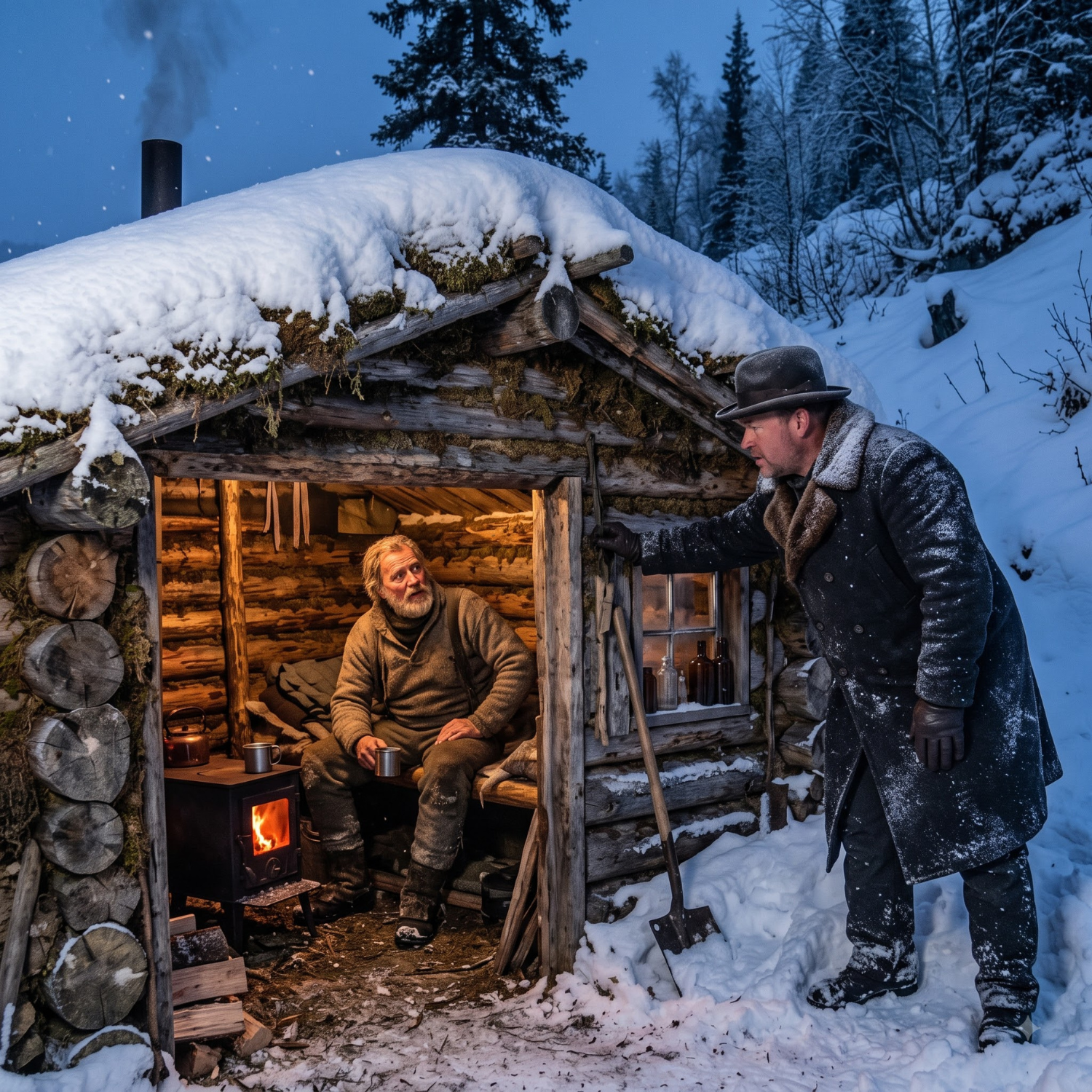
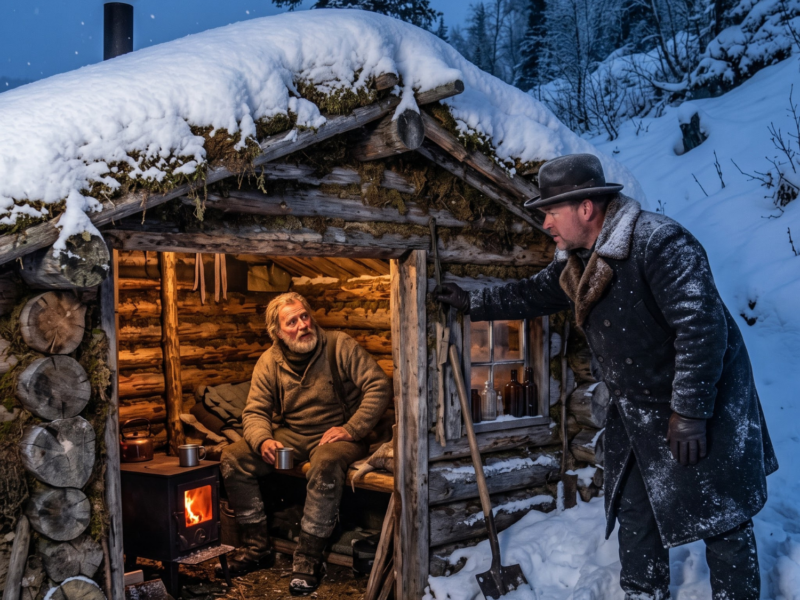
Inside a low, moss-roofed cabin dug deep into the hillside, Niels Baka slept in nothing but a wool undershirt. A single blanket lay neatly folded at the foot of his waist-high pole bunk. The sheet-iron stove in the corner had burned down to gray ash hours ago, yet the air in the small room was as gentle and even as an autumn afternoon.
Above the rough-hewn table, resting on a simple plank shelf, sat a row of five small glass medicine bottles.
In the North, where mercury thermometers took two years to arrive by dog sled and steamer, men made their own measures of the killer cold. They called it the sourdough thermometer. In the first bottle was quicksilver; it froze solid at forty degrees below zero. In the second was coal oil, which turned as thick and cloudy as milk at fifty below. In the third sat Jamaica ginger.
Tonight, the ginger had frozen.
Jamaica ginger surrendered at sixty degrees below zero. In the fourth bottle, Perry Davis’s Painkiller was beginning to turn a milky, opaque white—a warning that the air outside was pushing toward seventy below. Downriver at Fort Yukon, official weather stations would later record sixty-two below on this very night. Up on the creeks, trapped in the valleys, it was colder still. At this temperature, a man’s breath froze before it left his lips, falling like fine snow onto his chest. Wood chopped with an axe shattered like glass.
Down on the flat, entirely exposed to the pooling, lethal cold of the valley floor, stood a towering new cabin built of fresh green spruce. Inside, four men were in a desperate fight for their lives. They were chopping up their own dining table to feed a roaring, red-hot stove. The interior walls of their grand home were caked in ice an inch thick.
Back in the golden days of September, the entire creek had laughed at Niels Baka. Horace Whitfield, a wealthy dry-goods merchant from Chicago, had pointed his gloved finger at Niels’s dugout and declared, “We build like civilized people. He digs in like a groundhog.”
But the Yukon is a court where pride is tried by frost, and the verdicts are final. That winter, men on the creeks would lose fingers, toes, and their minds to the cold. Some would abandon fortunes in the ground, walking hundreds of miles over the frozen river just to find something to eat.
This is the story of the groundhog, the merchant, and the night the civilized men had to climb the hill to learn how to survive.