They Called Her the “Buried Barn Woman”—Until the Blizzard Proved Her Right ❄️
THE RIMS OF DUNORE CULIE
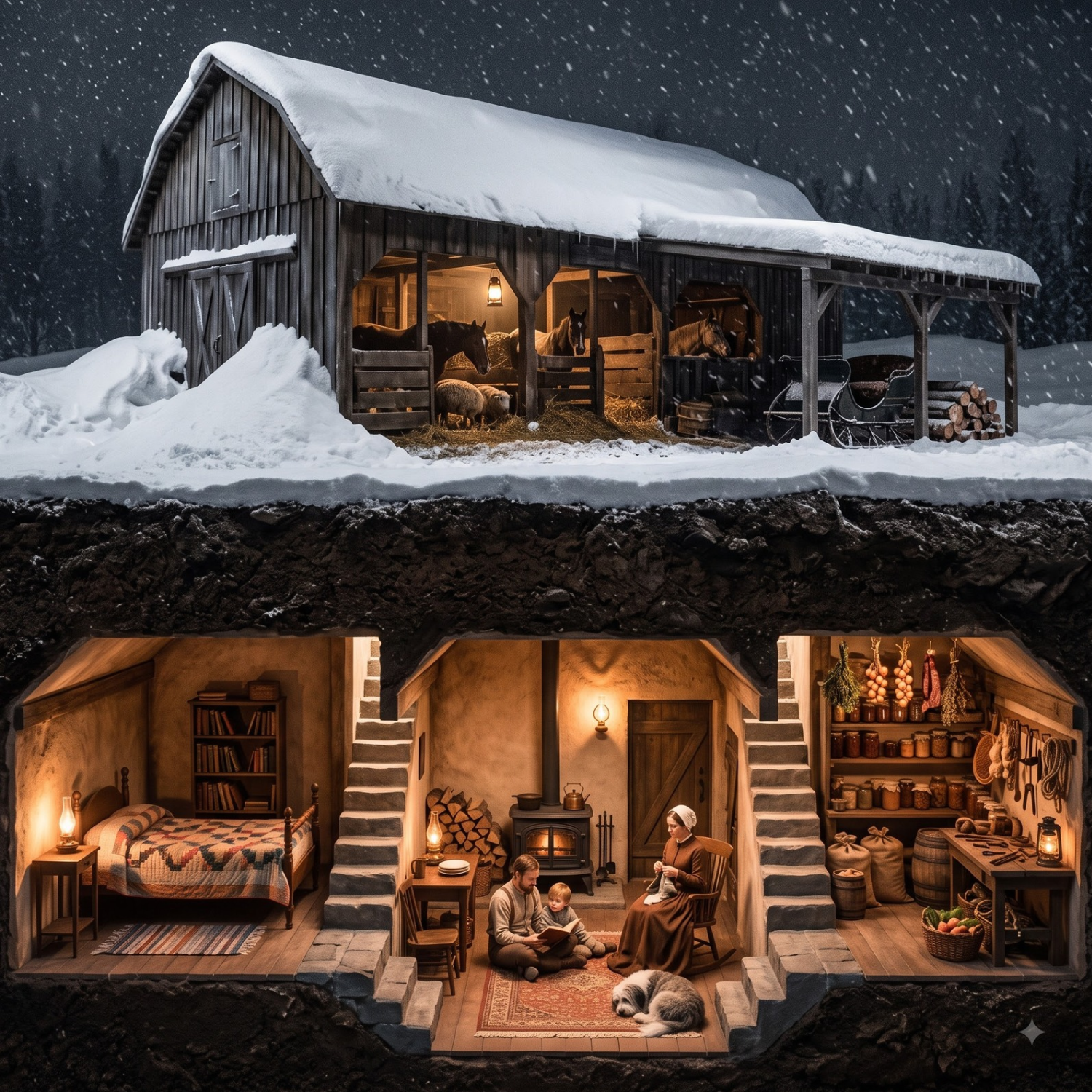
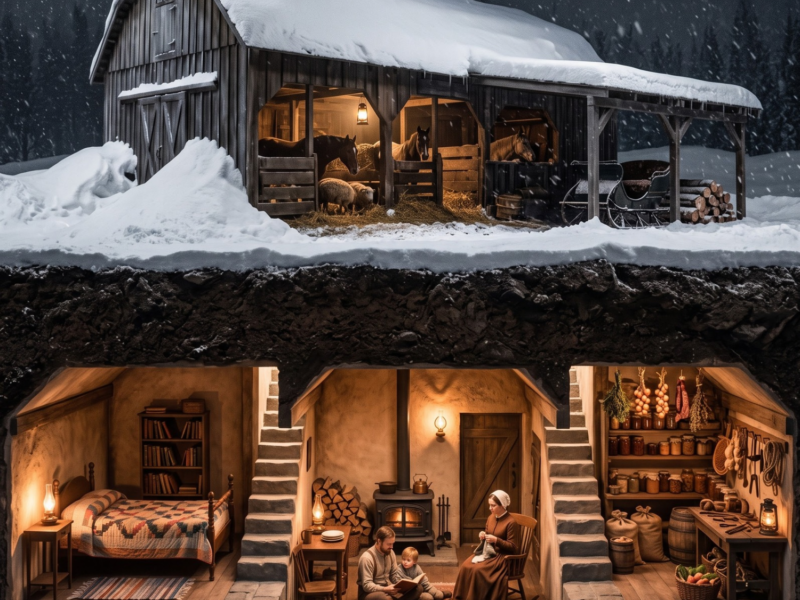
From the ruted freight road that ran the whole crooked length of Dunore Culie, the Caro Horse Barn looked like nothing at all. It looked like every other structure thrown up by hopeful, tired hands across the Montana Territory in those years: a low roof pitched hard against the weather, board walls gone the color of ash and old bone, a loft crammed to the rafters with oat straw. Inside was the slow, warm shifting of three horses and one gray mule breathing their heat into the dark.
A man driving his wagon past it in the autumn of 1886 would not have slowed his team. Nothing about the place asked him to. Nothing about it hinted that under those worn floorboards, in the frozen clay beneath the animals’ feet, a widowed mother had already begun to dig a bedroom for her children—and that before the winter was finished, it would become the one shelter in the whole valley that the wind could not find a way into.
By the following January, the hardest freeze the Culie had ever set down in living memory would bury cabins to their eaves, choking chimney after chimney until the smoke gave up and turned ordinary homes into ice boxes with families still huddled inside them. Out on the open range, the cattle would drift before the wind until the fence line stopped them, standing and dying in their hundreds, frozen upright in the drifts with frost thick as fur across their backs. When spring finally came, the ranchers would not bother to count them, but only drag them away.
That winter would be spoken of for fifty years afterward as the season the country broke. And in the middle of all that white ruin, the strangest dwelling in Dunore Culie would stay warm, dry, and quietly alive. Because the woman who built it understood one plain thing that all her wiser neighbors had missed: Cold takes only what you leave within its reach, and a body who gives it nothing to steal has already half won.