They Laughed at Her “Fool’s Furrow” — Until Her Crops Stayed Green Through the Worst Summer Drought
The Geography of Nowhere
It started the morning Levvenia Hatch first drove her rented wagon over the final limestone ridge into Redstone Flat. It was the spring of 1891, and the wind greeted her not as a breeze, but as a physical assault. It pressed against her chest like a broad, invisible hand, smelling of dry sage and distant, unreachable rain.
For the past nine years, Levvenia had lived a life measured in chalk dust, slate boards, and the recited multiplication tables of other people’s children in Columbus, Ohio. She was a woman of numbers and letters, of predictable equations and quiet boarding houses. She knew absolutely nothing about farming.
What she did know was that her father, Elden Hatch, had possessed a stubborn streak wide enough to span a continent. Two years before his heart finally surrendered in a cold November, he had traveled west and filed a homestead claim on one hundred and sixty acres of Kansas prairie. It was a tract of land that nobody else had wanted. It was one hundred and sixty acres of nothing that desperately wanted to be something.
When the lawyer’s letter arrived in Ohio, informing her of her inheritance, Levvenia had packed her trunk. The claim was the only thing Elden had left her. It was a final conversation from the grave, and Levvenia, having spent her life correcting the work of others, felt compelled to read it.
She pulled back on the reins, halting the weary draft horse. She stepped down from the wagon box, her boots kicking up puffs of white, alkaline dust.
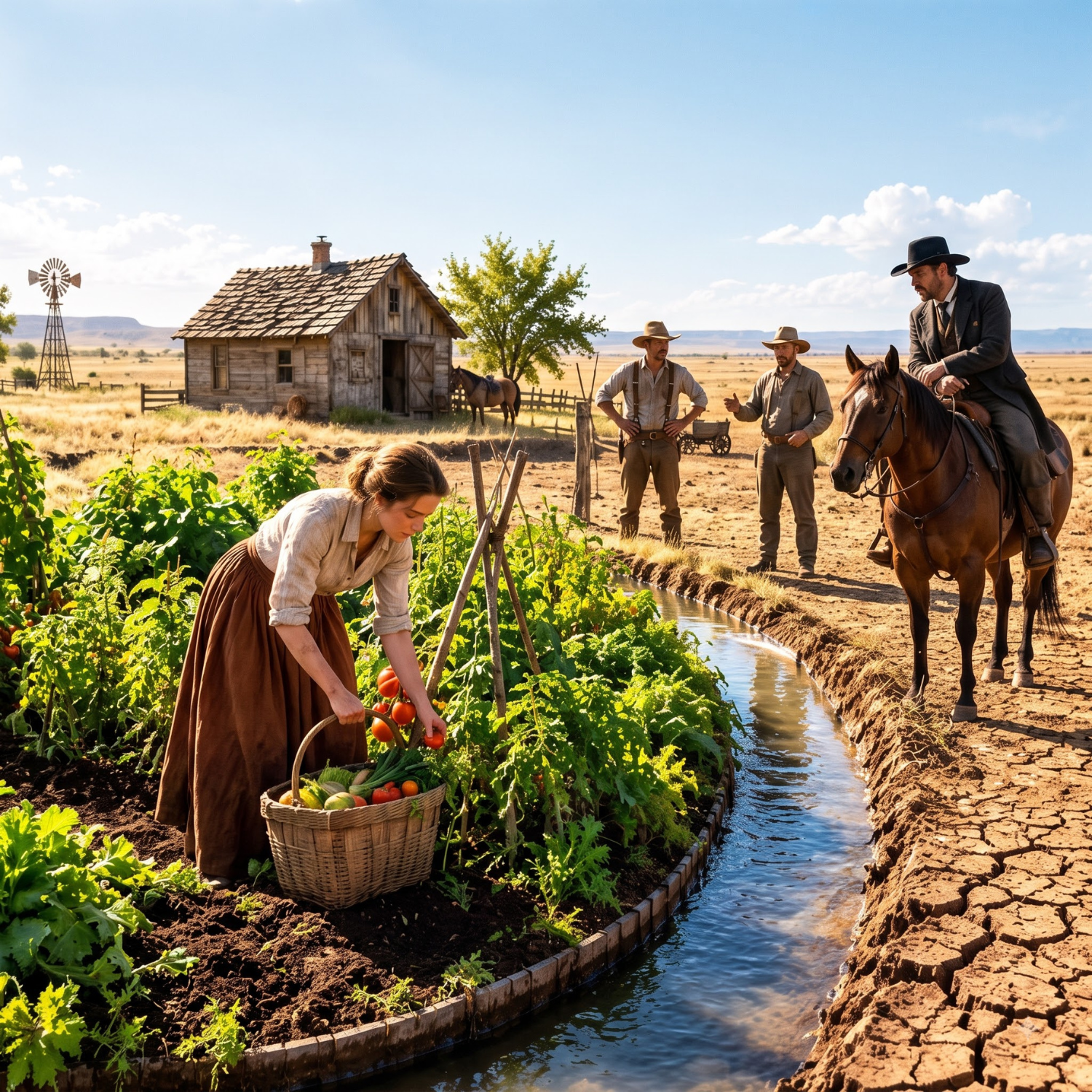
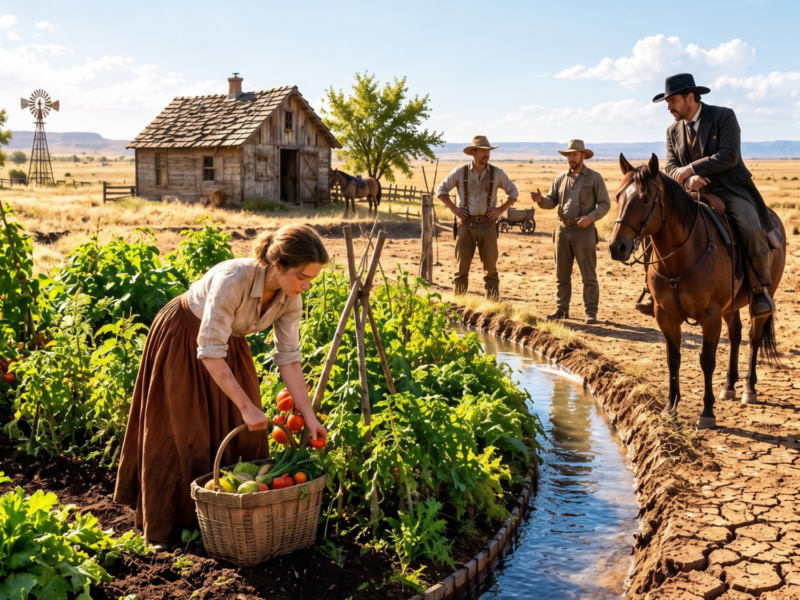
Before her lay the claim. It was an ocean of pale, shivering grass, broken only by a shallow, jagged draw that ran east through the center of the property. The locals, she would soon learn, called it Perdition Creek. The name was a warning. It held water perhaps three months out of the twelve. In the spring thaw, it might reach a man’s knees. By the cruel dog days of August, it was nothing but smooth, baked stones and white dust.
A red-tailed hawk circled once above the dry draw, shrieked a lonely cry, climbed higher into the thermals, and disappeared into the glaring sun.
Levvenia turned her attention to the cabin. Calling it a cabin was an act of extreme charity. It was a leaning shack of rough-hewn timber that looked as though it were flinching from a blow. The south wall had separated from the foundation logs, allowing a sharp blade of sunlight to slice across the dirt floor. The iron stovepipe protruding from the roof was missing its cap, leaving it open to the elements.
She pushed the creaking door inward. The interior smelled of abandonment and dry rot. In the corner sat a rusted iron bedframe where her father had apparently intended to sleep. He never had. He had died in a boarding house in town before he could even light the first fire in the stove.
Levvenia stood in the exact center of that single, sweltering room. She did not cry. She did not curse her father’s foolishness. She simply removed her traveling hat, set her heavy trunk on the dirt floor, rolled the sleeves of her cotton blouse past her elbows, and went looking for a broom.